Welcome to the Bearing Official Website.
National Consultation Hotline:


 News & Updates
 Industry News
In the daily operation of industrial equipment, bearings play a vital role, directly affecting the performance, efficiency, and service life of the equipment. Therefore, choosing the right bearing products is crucial for ensuring the long-term stable operation of the equipment. Selecting bearing products based on the expected lifespan of the equipment not only improves the performance of the equipment but also extends its service life and reduces maintenance costs.
1. Understand the operating conditions of the equipment
Firstly, it is necessary to understand the operating conditions of the equipment in detail, including the working environment (such as temperature, humidity), load type and size, speed, etc. These factors will directly affect the selection of bearings. For example, for equipment operating under extreme temperature conditions, it may be necessary to choose bearings with special protective coatings or those that can withstand high temperatures.
2. Consider the expected lifespan of the equipment
The expected lifespan of the equipment is one of the key factors to consider when selecting bearings. Generally speaking, the longer the expected lifespan, the higher the performance requirements of the bearing will be. Therefore, when selecting bearings, not only should the current load and working conditions be considered, but also the various possible changes within the expected lifespan of the equipment.
3. Evaluate the performance parameters of the bearing
When selecting bearings, it is necessary to carefully evaluate their performance parameters, such as load-bearing capacity, rotation accuracy, noise level, etc. Different application scenarios have different requirements for these parameters. For example, in high-speed operating equipment, it may be necessary to choose bearings with high rotation accuracy and low noise levels; while in heavy-load conditions, it may be necessary to choose bearings with stronger load-bearing capacity.
4. Consider maintenance costs
In addition to the performance of the equipment itself, the maintenance costs of the bearing should also be considered. For example, choosing bearings that are easy to maintain and replace can reduce maintenance costs over the long term. At the same time, choosing bearings with a longer service life can also reduce downtime to some extent due to bearing replacement.
5. Refer to industry standards and recommendations
When selecting bearings, it is also possible to refer to relevant industry standards and recommendations. These standards and recommendations are usually based on a large number of actual application cases and can provide a relatively scientific basis for selection. In addition, maintaining good communication with suppliers or manufacturers and obtaining professional advice is also very helpful.
In summary,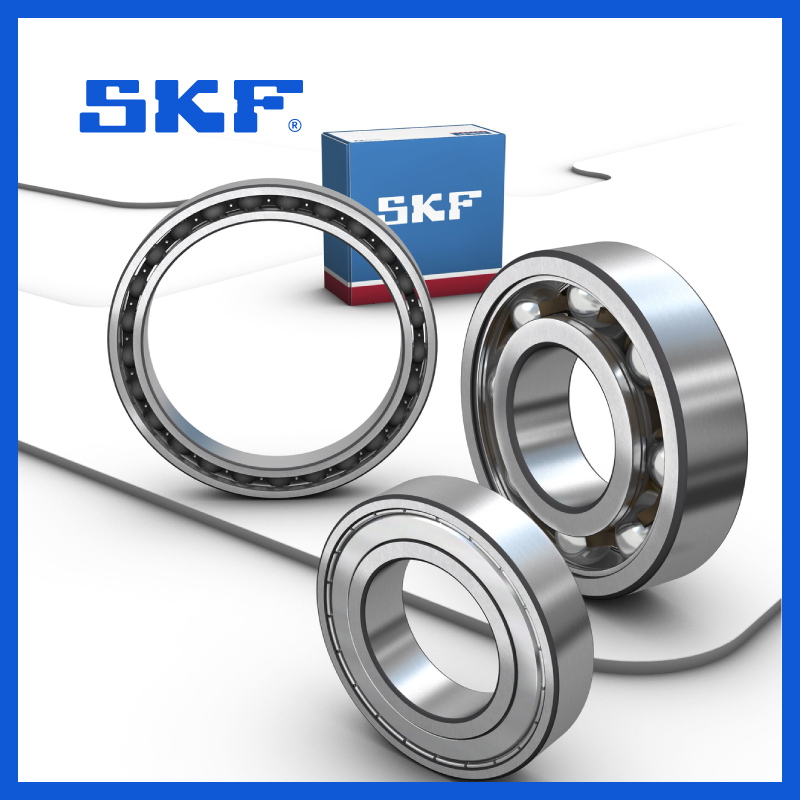 selecting appropriate bearing products based on the expected lifespan of the equipment requires comprehensive consideration of various factors such as the operating conditions, expected lifespan, performance parameters, maintenance costs, and industry standards. Through detailed evaluation and selection, the overall performance of the equipment can be effectively improved, and its service life can be extended.