Welcome to the Bearing Official Website.
National Consultation Hotline:


 News & Updates
 Industry News
Pre-tensioning Methods and Their Advantages and Disadvantages of Angular Contact Ball Bearings
As a precision mechanical component, the selection of pre-tensioning method for angular contact ball bearings has a direct impact on the operational performance, life, and stability of the equipment. Pre-tension refers to the application of axial force during the installation or assembly process of the bearing, causing relative axial displacement between the inner and outer rings to eliminate internal clearance and improve the rotation accuracy and load-bearing capacity of the bearing. The selection of pre-tensioning method mainly depends on the working conditions of the bearing, the type of load, the speed, and the size of the bearing.
Radial pre-tension
Radial pre-tension is the most common pre-tensioning method, mainly achieved by applying axial force to the inner or outer ring of the bearing. The size of the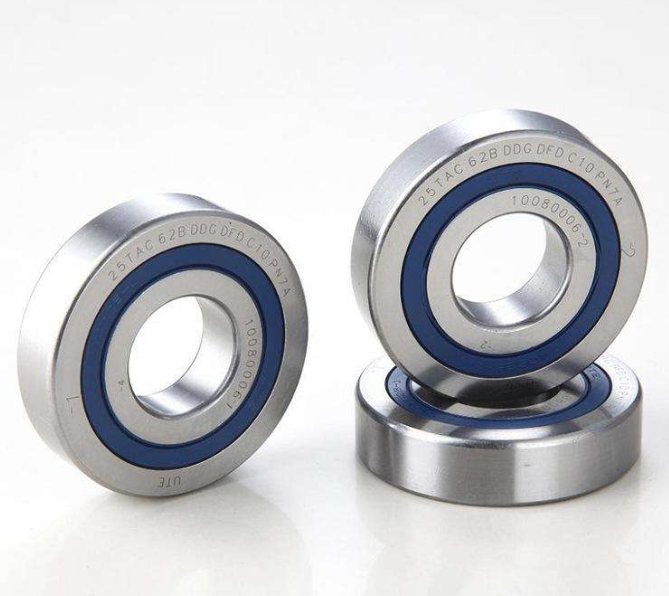 pre-tensioning amount directly affects the pre-tensioning force of the bearing, thereby affecting the bearing's load-bearing capacity and rotation accuracy. The advantages of radial pre-tension lie in its simple structure, low cost, and ease of implementation. However, its disadvantages are that if the pre-tensioning amount is too large, it may cause the bearing temperature to rise, increase wear, and even produce excessive axial force, causing the radial clearance of the bearing to decrease and affecting the normal operation of the bearing.
Axial pre-tension
Axial pre-tension refers to the application of axial force between the inner and outer rings of the bearing, causing relative axial displacement between the inner and outer rings, thereby eliminating internal clearance. Axial pre-tension is mainly suitable for working environments that require the bearing to withstand axial force. Its advantages are that it can effectively improve the axial load-bearing capacity of the bearing, improve rotation accuracy, reduce vibration and noise. However, special attention must be paid to the control of pre-tensioning force in axial pre-tension. If the pre-tensioning force is too large, it may cause the radial clearance of the bearing to decrease, affecting the rotation performance of the bearing.
Composite pre-tension
Composite pre-tension is the combination of radial pre-tension and axial pre-tension. By simultaneously applying radial and axial pre-tensioning forces, it can simultaneously improve the radial and axial load-bearing capacity of the bearing, as well as improve the rotation accuracy and stability. The advantages of composite pre-tension are that it can simultaneously solve radial and axial problems and improve the overall performance of the bearing. However, the structure of composite pre-tension is complex, the cost is high, and higher requirements are placed on the control of pre-tensioning force.
In summary, the pre-tensioning method of angular contact ball bearings should be selected according to specific working conditions and requirements. The selection of pre-tensioning method requires comprehensive consideration of factors such as the magnitude of pre-tensioning force, control of pre-tensioning force, stability of pre-tensioning force, and the influence of pre-tensioning force on the bearing.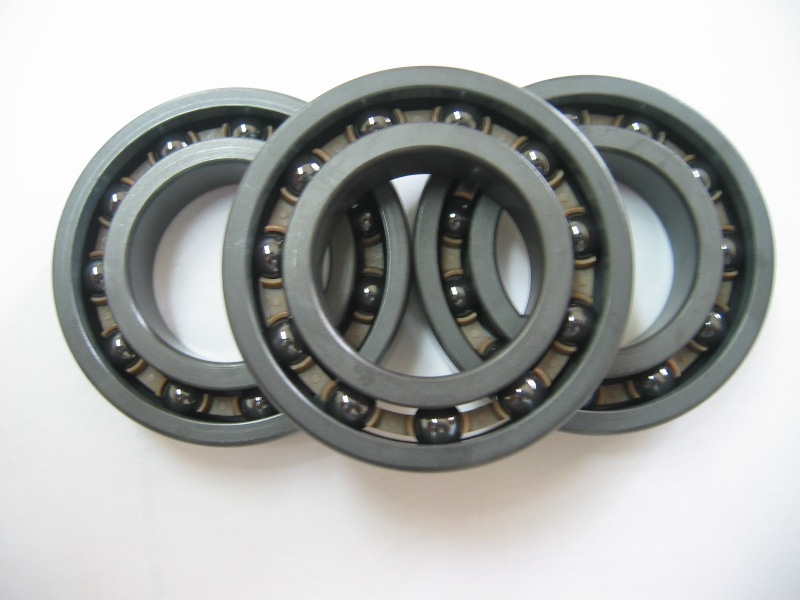 In practical applications, the most suitable pre-tensioning method should be selected according to specific circumstances.