Welcome to the Bearing Official Website.
National Consultation Hotline:


 News & Updates
 Industry News
Ball joints are precision mechanical components widely used in industrial and mechanical engineering. Their original design intention is to address the issue of maintaining high precision and low friction during large-angle rotation or reciprocating motion. The installation of ball joints is crucial for their performance and life, therefore, the requirements for mating parts and the control of installation accuracy are critical links.
Requirements for mating parts
Dimensional accuracy: The dimensions of mating parts such as shafts and holes must be precise to ensure that ball joints can achieve correct fitting during assembly, avoiding wear or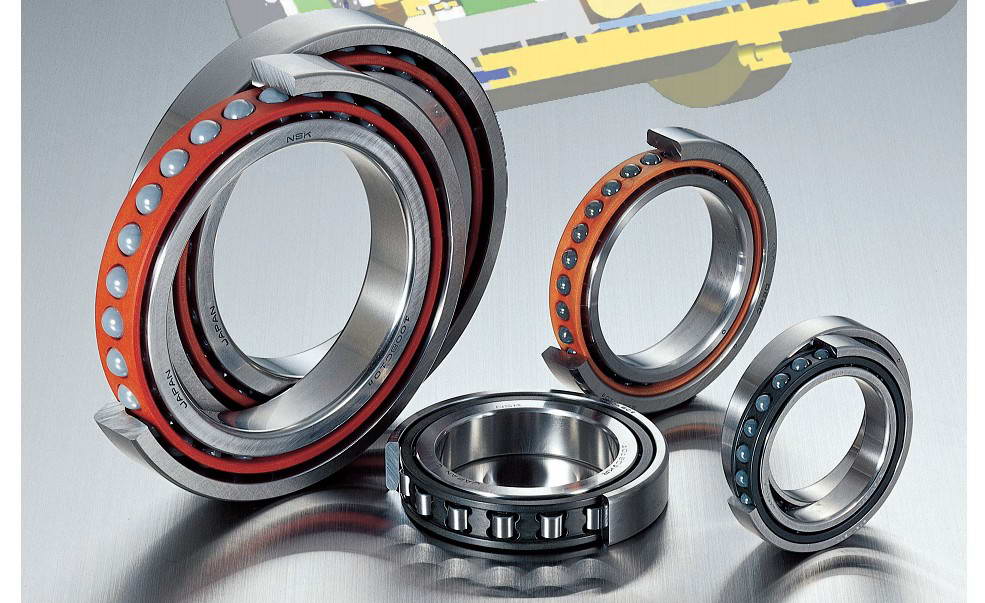 excessive gaps caused by dimensional deviations.
Surface roughness: The roughness of the mating part surfaces needs to be controlled within a certain range, usually less than the roughness requirements of the mating surface of the ball joint, to reduce friction and wear.
Material selection: The material of the mating parts should match the ball joint to ensure good wear resistance and corrosion resistance. For example, in high-temperature or corrosive environments, specific heat-resistant or corrosion-resistant materials may be required.
Surface treatment: Appropriate surface treatment can improve the wear resistance of mating parts and extend their service life. For example, processes such as sandblasting and coating can improve the roughness and hardness of the surface.
Key points for controlling installation accuracy
Installation sequence: Generally, the installation sequence should follow the principle of installing the outer ring first, then the rolling elements, and finally the inner ring to ensure the correct position of the components.
Assembly torque: Correct assembly torque is crucial for maintaining the normal operation of ball joints. Excessive torque can lead to bearing damage, while insufficient torque can result in unstable assembly or increased wear.
Lubrication and sealing: Proper lubrication and sealing measures can effectively extend the service life of ball joints. Suitable lubricants and sealing methods should be selected according to the application environment and requirements.
Environmental control: During the installation and use process, environmental temperature, humidity, and other conditions should be controlled as much as possible to minimize the impact on the performance of ball joints.
In summary, the installation of ball joints is a highly technical task that requires strict control of the precision of mating parts and the selection of appropriate installation methods. By following the above requirements and key points, the service life and performance of ball joints can be effectively improved.