Welcome to the Bearing Official Website.
National Consultation Hotline:


 News & Updates
 Industry News
Sliding bearings and rolling bearings are two common shaft support methods in mechanical engineering. They have significant differences in working principles, application scenarios, and lubrication requirements. Below, we will discuss in detail the lubrication mechanisms, characteristics, and differences between these two types of bearings.
Sliding bearings
Sliding bearings are bearings that rely on liquid (usually lubricating oil) or solid (such as grease) to reduce friction. Their working principle is to form a film of lubricant or solid lubricant within the bearing to separate the metal surfaces between the shaft and the bearing, thereby reducing friction and wear. Sliding bearings can be further divided into hydrostatic bearings and hydrodynamic bearings, the latter of which supports the shaft through the formation of an oil film within the bearing, thus achieving frictionless or extremely low friction operation.
Characteristics:
Suitable for applications requiring high speed, high precision, and heavy loads.
Capable of maintaining good performance under high temperatures and high speeds.
Especially suitable for applications with high rotational accuracy requirements and the need to maintain a low friction coefficient.
Rolling bearings
Rolling bearings are supported by the interaction between the rolling elements (such as balls or rollers) and the retainer and inner and outer rings. The working principle of rolling bearings is to reduce friction and wear between the shaft and the bearing by rolling the rolling elements between the inner and outer rings. Rolling bearings can be divided into various types, such as cylindrical roller bearings, ball bearings, and needle roller bearings, depending on the shape and internal structure of the rolling elements.
Characteristics:
Small in size and light in weight, suitable for occasions with limited space.
Simple structure, easy to manufacture, and relatively low cost.
Suitable for low-speed, heavy-load, and high-temperature environments.
Differences between sliding bearings and rolling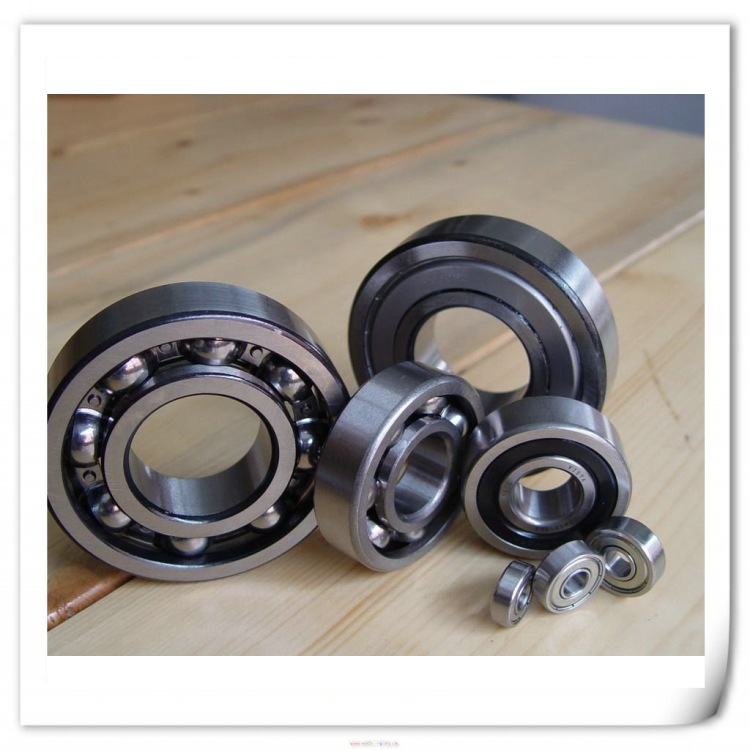 bearings
Friction coefficient: sliding bearings generally have a lower friction coefficient, while rolling bearings have a relatively higher friction coefficient due to the presence of rolling elements.
Lubrication requirements: sliding bearings require regular lubrication to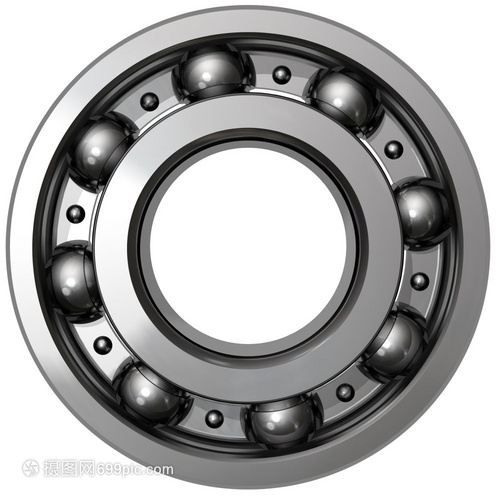 maintain their performance, while the rolling elements within rolling bearings themselves have certain self-lubricating properties.
Application scenarios: sliding bearings are suitable for applications requiring low friction and high precision, such as precision instruments and precision machinery; rolling bearings are widely used in various types of machinery and equipment, such as automobiles, machine tools, and household appliances.
Temperature adaptability: sliding bearings perform better in high-temperature environments, while rolling bearings may experience a decrease in performance due to insufficient lubrication under high temperatures.
In general, sliding bearings and rolling bearings each have their own advantages and application scenarios, and the choice of which type of bearing depends on the specific application requirements and technical conditions.