Welcome to the Bearing Official Website.
National Consultation Hotline:


 News & Updates
 Industry News
What factors affect the axial load-bearing capacity of thrust ball bearings, and how to evaluate them?
Thrust ball bearings are a common mechanical component, mainly used to bear unidirectional axial loads. They play an important role in industrial applications, especially in situations where axial forces need to be withstood. The axial load-bearing capacity of thrust ball bearings is influenced by various factors, including but not limited to bearing structural design, material characteristics, size, and lubrication conditions. This article will discuss the influencing factors and evaluation methods of the axial load-bearing capacity of thrust ball bearings.
Bearing structural design: The structural design of thrust ball bearings has a direct impact on their axial load-bearing capacity. For example, the design of the inner and outer rings, the design of the balls and raceways, and the surface roughness of the raceways, will all affect its load-bearing capacity. Reasonable structural design can improve the bearing's load-bearing capacity, while excessive design deviations will reduce it.
Material characteristics: The material characteristics of thrust ball bearings also directly affect their axial load-bearing capacity. For example, the hardness, toughness, and fatigue strength of the material will all affect the bearing's load-bearing capacity. Generally, the higher the hardness of the material, the stronger its load-bearing capacity; the better the toughness, the less likely it is to break under axial force.
Size: The size of the bearing also affects its axial load-bearing capacity. Generally, the larger the bearing size, the stronger its axial load-bearing capacity. This is because larger bearings have more internal space, which can accommodate more balls, thereby generating greater rolling friction force when subjected to the same axial force, thus improving the load-bearing capacity.
Lubrication conditions: Good lubrication conditions can effectively reduce the friction coefficient of the bearing, thereby improving its axial load-bearing capacity. The type, viscosity, and injection amount of the lubricant will all affect the bearing's load-bearing capacity. For example, using the appropriate lubricant can reduce the friction on the bearing surface and improve its load-bearing capacity.
The evaluation of the axial load-bearing capacity of thrust ball bearings usually requires experiments to be completed, such as using an axial force testing machine for testing to determine the bearing's load-bearing capacity under different loads. In addition, it can also be evaluated through calculation formulas, such as using Newton's second law, etc.
In general, the axial load-bearing capacity of thrust ball bearings is influenced by various factors, including structural design, material characteristics, size, and lubrication conditions. By reasonable structural design, selecting appropriate materials, optimizing size,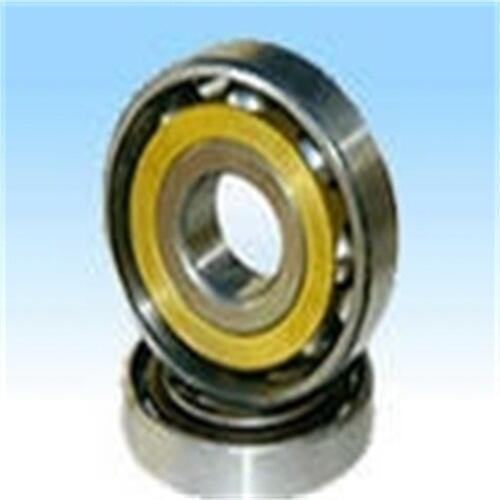 and choosing suitable lubrication conditions, the axial load-bearing capacity of thrust ball bearings can be improved.