Welcome to the Bearing Official Website.
National Consultation Hotline:


 News & Updates
 Industry News
Comprehensive Application of Various Detection Methods to Improve Accuracy in Bearing Fault Diagnosis
As a key component in the mechanical system, the operating status of the bearing is directly related to the normal operation of the entire mechanical system. However, bearing faults often have concealedness and abruptness, which makes diagnosis very difficult. Therefore, how to accurately and quickly diagnose bearing faults and improve the accuracy of fault diagnosis has become an important issue. This article will discuss how to comprehensively apply various detection methods to improve the accuracy of bearing fault diagnosis.
Firstly, vibration detection is one of the most commonly used techniques in bearing fault diagnosis. By vibration detection, one can obtain vibration signals during bearing operation, analyze signal characteristics, identify abnormal vibration, and then judge whether the bearing has a fault. Vibration detection can provide real-time information about the operating status of the bearing, providing a basis for fault diagnosis. However, vibration detection also has certain limitations, such as some types of faults, such as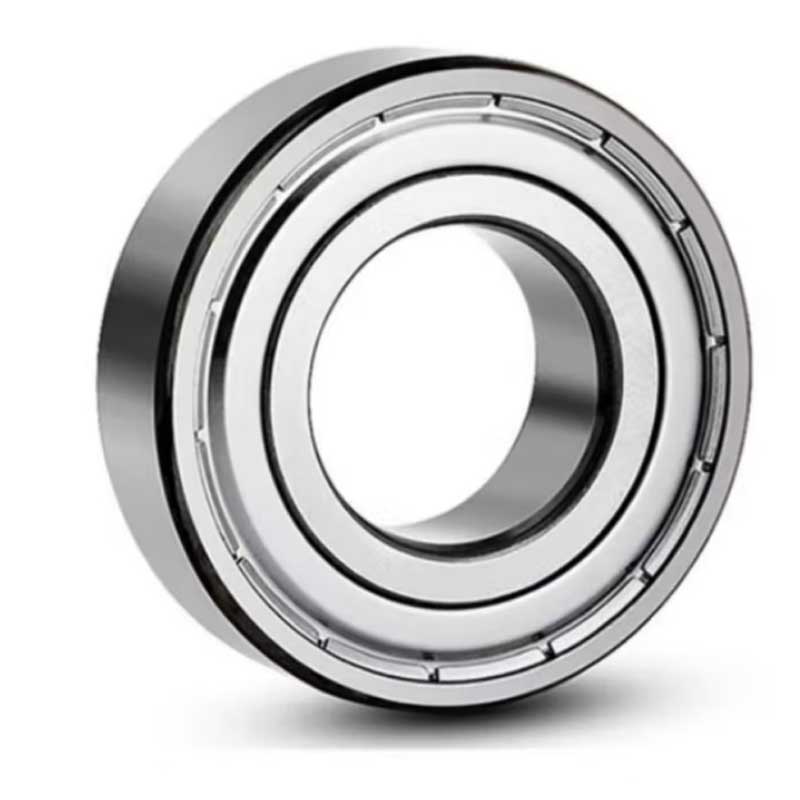 bearing track wear, may have weak vibration signals that are easily overlooked.
Secondly, oil analysis is another important diagnostic method. By analyzing the oil in the working environment of the bearing, one can understand the lubrication status and wear condition of the bearing. Oil analysis can provide detailed information about the working environment of the bearing, which helps us understand the cause of the bearing failure. However, oil analysis also has certain limitations, such as it requires certain equipment and professional knowledge, and the results of oil analysis may be affected by environmental factors.
Furthermore, temperature detection is an indispensable part of bearing fault diagnosis. By detecting the working temperature of the bearing, one can understand the working status of the bearing. If the bearing temperature rises abnormally, it may mean that the bearing has already developed a fault. However, temperature detection also has its limitations, such as it can only provide indirect information about the working status of the bearing and cannot directly identify the type of fault.
The comprehensive application of various detection methods can improve the accuracy of bearing fault diagnosis. For example, vibration detection can identify abnormal vibration during bearing operation, oil analysis can understand the working environment of the bearing, and temperature detection can understand the working status of the bearing. By comprehensively applying various detection methods, one can have a more comprehensive understanding of the operating status of the bearing and improve the accuracy of fault diagnosis. At the same time, by combining various detection methods, one can also discover problems that are difficult to find with a single detection method, thus improving the comprehensiveness and accuracy of diagnosis.
It is finally important to note that when employing a variety of detection methods, it is necessary to combine actual conditions and choose the most suitable detection method to avoid the singleization of detection methods. At the same time, it is necessary to comprehensively analyze the detection results with professional knowledge and experience to improve the accuracy of fault diagnosis.