Welcome to the Bearing Official Website.
National Consultation Hotline:


 News & Updates
 Industry News
 Calculation of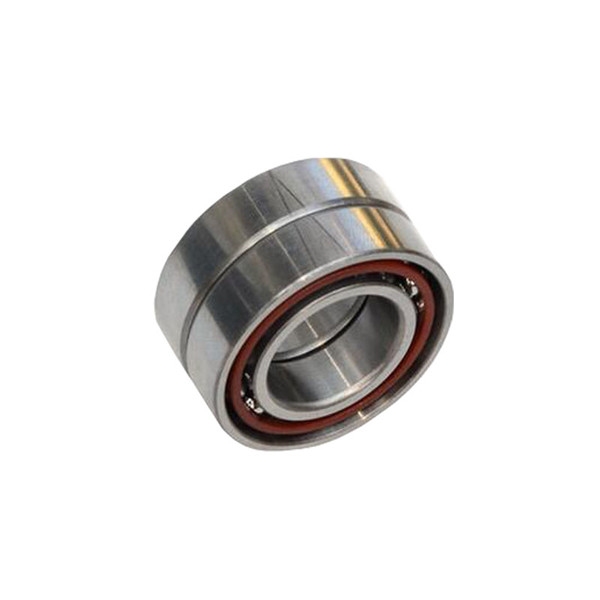 the Combined Axial and Radial Load-Bearing Capacity of Angular Contact Ball Bearings
Angular contact ball bearings are ball bearings with a specific contact angle, widely used in various mechanical systems, especially in situations requiring high load-bearing capacity and high precision. It is crucial to understand the axial and radial load-bearing capacity of angular contact ball bearings when designing and using them. This article will discuss how to calculate the combined load-bearing capacity of the axial and radial of angular contact ball bearings.
The axial load-bearing capacity refers to the ability of the angular contact ball bearing to maintain stability and not to shift under the action of axial forces. In angular contact ball bearings, the load-bearing capacity of the axial load is mainly determined by the contact angle and the type of the bearing. For an angular contact ball bearing with a contact angle of α, its axial load-bearing capacity can be expressed as:
[ F_{ax} = \frac{C_{ax}}{sin(\alpha/2)} ]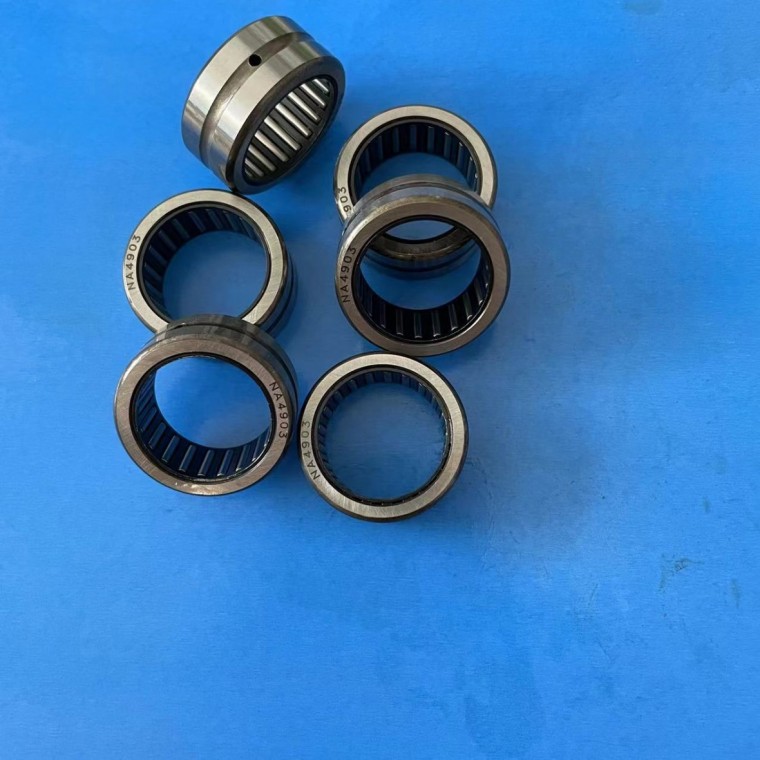
Among them, (F_{ax}) is the axial load-bearing capacity, (C_{ax}) is the axial load-bearing coefficient of the bearing, and (α) is the contact angle.
The radial load-bearing capacity refers to the ability of the angular contact ball bearing to maintain stability and not to shift under the action of radial loads. The calculation of the radial load-bearing capacity involves the contact stress and contact area between the balls and raceways inside the bearing. For an angular contact ball bearing with a contact angle of α, its radial load-bearing capacity can be expressed as:
[ F_{rad} = \frac{C_{rad} \cdot R}{sin(\alpha/2)} ]
Among them, (F_{rad}) is the radial load-bearing capacity, (C_{rad}) is the radial load-bearing coefficient of the bearing, and (R) is the inner diameter of the bearing.
In practical applications, the axial and radial load-bearing capacity of the bearings is usually provided by the manufacturer, but it is very important to understand these formulas and their influencing factors during the design and analysis phase. For example, by adjusting the contact angle or selecting different types of bearings, the load-bearing capacity of the bearings can be optimized to meet the specific requirements of the application.
It should be noted that the aforementioned formulas are based on theoretical calculations under ideal conditions, and in practical applications, factors such as material fatigue life, temperature changes, and lubrication conditions need to be considered. Therefore, when designing and using angular contact ball bearings, in addition to considering the load-bearing capacity, other factors need to be comprehensively considered to ensure the reliability and service life of the bearings.
In summary, calculating the axial and radial load-bearing capacity of angular contact ball bearings is an important step in their design and use. By understanding these calculation formulas and their influencing factors, one can more effectively select and use angular contact ball bearings to meet the load-bearing requirements of various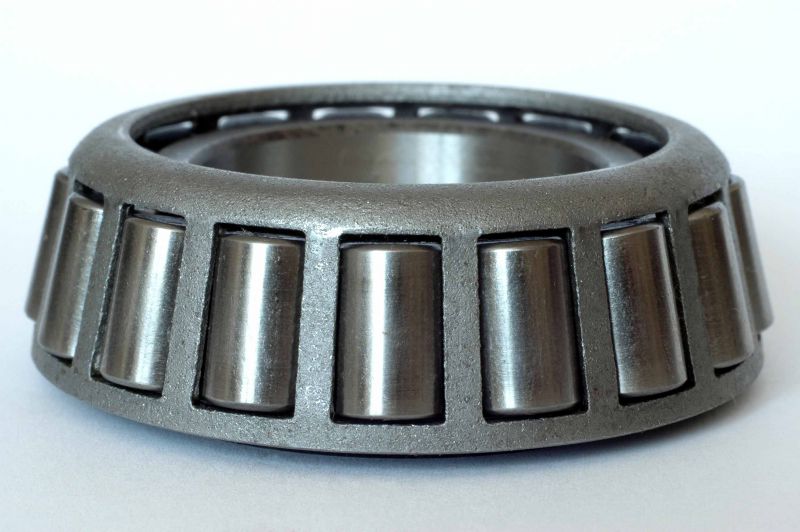 mechanical systems.