Welcome to the Bearing Official Website.
National Consultation Hotline:


 News & Updates
 Industry News
Plastic bearings are an important component widely used in various mechanical equipment. They are widely used in many fields such as industry, automotive, aerospace, medical equipment, etc., due to their advantages such as light weight, low friction coefficient, corrosion resistance, and good wear resistance. However, plastic bearings also face the problem of wear, which not only affects their performance but may also lead to equipment failure, affecting production efficiency and product quality. Therefore, understanding the wear characteristics of plastic bearings and taking effective measures to extend their service life is of great significance for maintaining the normal operation of equipment.
Wear characteristics of plastic bearings
The wear characteristics of plastic bearings are mainly determined by the inherent characteristics of the material, the use environment conditions, and the working conditions. Common wear forms include pitting, corrosion wear, and abrasive wear. In actual use, plastic bearings are prone to wear in high-speed, heavy-load, or high-temperature environments. In addition, improper lubrication and the intrusion of environmental pollutants can also accelerate the wear of plastic bearings.
Effective methods to extend service life
Choose the appropriate material and type: According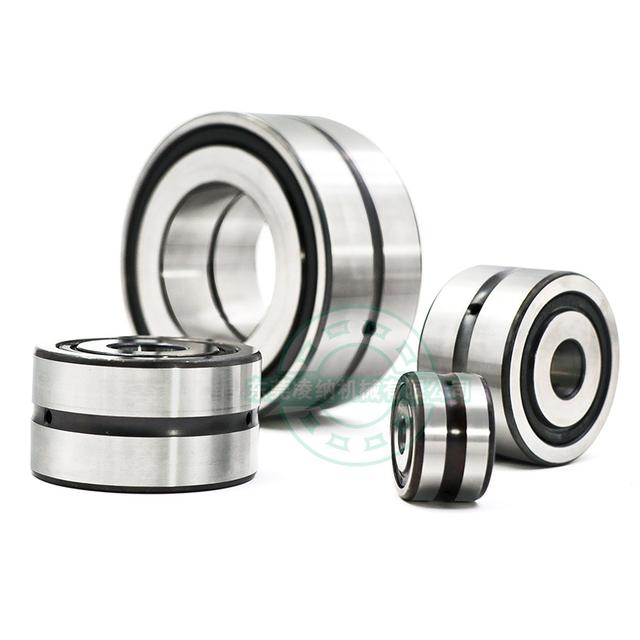 to the application environment and load conditions, choose suitable plastic bearing materials, such as nylon, polyformaldehyde, etc., which have good wear resistance and corrosion resistance.
Optimize lubrication: Proper lubrication can reduce friction and wear. Choosing the right lubricant and ensuring that the lubrication system can continuously and effectively provide lubrication to the bearing is the key to extending the service life of the bearing.
Control working conditions: Try to avoid using plastic bearings under extreme temperature or humidity conditions, reduce overload and vibration to reduce wear.
Regular inspection and maintenance: Regularly inspect the condition of the bearing, promptly identify and deal with potential problems, such as timely replacement of worn bearings or lubrication systems.
Use protective measures: Where possible, use protective covers or sealing devices to prevent the intrusion of dust, moisture, and other contaminants, reducing damage to the bearing.
Rational design and installation: Ensure that the installation position and method of the bearing are correct, avoiding stress concentration and unnecessary friction.
By taking these measures, the service life of plastic bearings can be effectively extended, maintenance costs reduced, and production efficiency improved. In practical applications, flexible selection and combination of these methods according to specific working conditions and requirements will help achieve the best equipment performance and economic benefits.