Welcome to the Bearing Official Website.
National Consultation Hotline:


 News & Updates
 Industry News
Magnetically levitated bearings (Magnetic Bearing) are precision mechanical devices that use electromagnetic force to suspend and support the rotor, mainly used in occasions that require high precision, low friction, and wear-free operation. Compared with traditional bearings, magnetically levitated bearings have significant advantages, but there are also some unique challenges and difficulties in fault diagnosis.
Main differences between magnetically levitated bearings and traditional bearings
Working principle: Traditional bearings rely on lubricating oil or grease to reduce friction, while magnetically levitated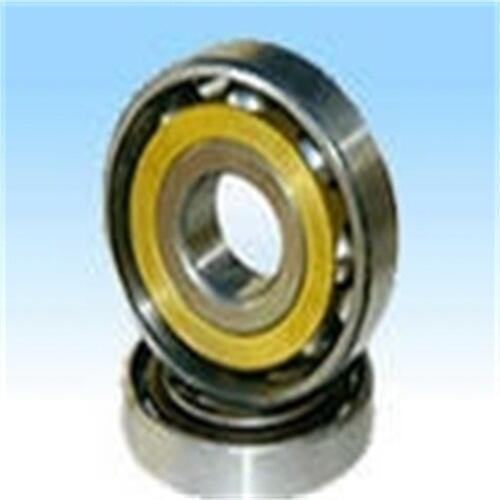 bearings achieve the suspension of the rotor through electromagnetic force, without physical contact.
Friction-free: Since there are no physical contact points during the operation of magnetically levitated bearings, theoretically, the friction force is zero, which makes magnetically levitated bearings more efficient and have lower operating temperatures.
High precision and stability: Magnetically levitated bearings can provide extremely high rotation precision and stability, suitable for equipment that requires high precision operation, such as medical equipment, precision instruments, etc.
Wear-free: Due to the absence of physical contact, the wear problem of magnetically levitated bearings is greatly reduced, extending the service life of the equipment.
Difficulties and fault diagnosis
Although magnetically levitated bearings have many advantages, there are also some challenges and difficulties in fault diagnosis in practical applications:
Electromagnetic interference: When working in a strong electromagnetic environment, electromagnetic interference may affect the normal operation of the magnetically levitated bearing, and measures need to be taken for shielding.
Temperature control: Due to the absence of physical contact, temperature changes have a more significant impact on the bearing. Excessive temperature may lead to a decline in material properties, so precise temperature control is required.
Maintenance complexity: The structure of magnetically levitated bearings is usually more complex, and compatibility and consistency of electromagnetic components need to be considered during maintenance and repair.
Fault diagnosis and detection: Compared with traditional bearings, the fault of magnetically levitated bearings may be more concealed, and advanced sensors and data analysis technology are required to achieve early fault warning and diagnosis.
Conclusion
Magnetically levitated bearings show great potential in many fields, but their unique design and working principle also bring new challenges. Through continuous technological innovation and optimization, the fault diagnosis of magnetically levitated bearings, compared with traditional bearings, can provide more efficient and accurate services, providing strong support for the development of industry and science and technology.