Welcome to the Bearing Official Website.
National Consultation Hotline:


 News & Updates
 Industry News
Miniature bearings play a crucial role in modern industry, especially in equipment requiring high precision, efficiency, and reliability. Due to their small size, miniature bearings have more stringent requirements for lubrication, so the design and selection of their lubrication methods are particularly important. This article will discuss the simplicity of lubrication methods for miniature bearings and their adaptability to micro-structures.
Lubrication methods for miniature bearings
The lubrication methods for miniature bearings are mainly divided into dry lubrication and oil lubrication. Dry lubrication, which does not require the use of oil, avoids the problems of oil leakage and oil contamination, and is therefore widely used in miniature bearings. Dry lubrication can use solid lubricants such as solid lubricating grease, solid lubricating cream, etc., or solid powder lubricants. These lubricants can form a protective film on the friction surface to reduce friction and reduce wear. In addition, there are solid self-lubricating materials such as graphite and carbon fibers, which can also form a protective film on the friction surface to reduce friction and reduce wear.
Oil lubrication is suitable for applications requiring high precision and reliability. By injecting lubricating oil into the bearing, friction can be effectively reduced, wear can be reduced, and the heat generated by friction can also be removed to prevent bearing overheating. Oil lubrication can adopt a circulating lubrication system, which circulates the oil to the bearing interior through a pump and recovers the oil through a filter, realizing the recycling of oil, which saves resources and reduces pollution.
Adaptability of miniature bearings to lubrication methods
Miniature bearings have very small sizes and have more stringent requirements for lubrication. Therefore, choosing the appropriate lubrication method is crucial for maintaining bearing performance. Dry lubrication, which does not require the use of oil, avoids the problems of oil leakage and contamination, and is suitable for miniature bearings. The use of solid lubricants and solid powder lubricants can effectively reduce friction, reduce wear, and improve the service life of miniature bearings. In addition, the use of solid lubricants and solid powder lubricants can also reduce the volatilization and loss of lubricants, maintaining the stability of the lubrication effect.
Although oil lubrication requires higher requirements for lubrication effects, it is suitable for applications requiring high precision and reliability due to its ability to remove the heat generated by friction and prevent bearing overheating. Oil lubrication can be realized through a circulating lubrication system, which not only saves resources but also reduces pollution.
Conclusion
The simplicity of lubrication methods for miniature bearings and their adaptability to micro-structures are crucial for ensuring their performance in various industrial applications. Dry lubrication and oil lubrication are two common lubrication methods, each with its own application scenarios and advantages. Choosing the appropriate lubrication method can effectively improve the service life and reliability of miniature bearings, thereby ensuring the normal operation of equipment. With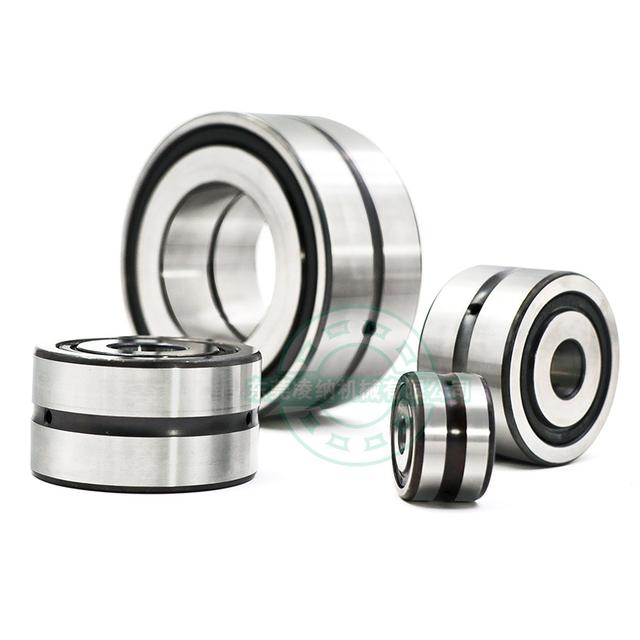 the advancement of technology, more efficient and environmentally friendly lubrication methods may emerge to meet a wider range of application needs for miniature bearings.